
 Image 1 of 1
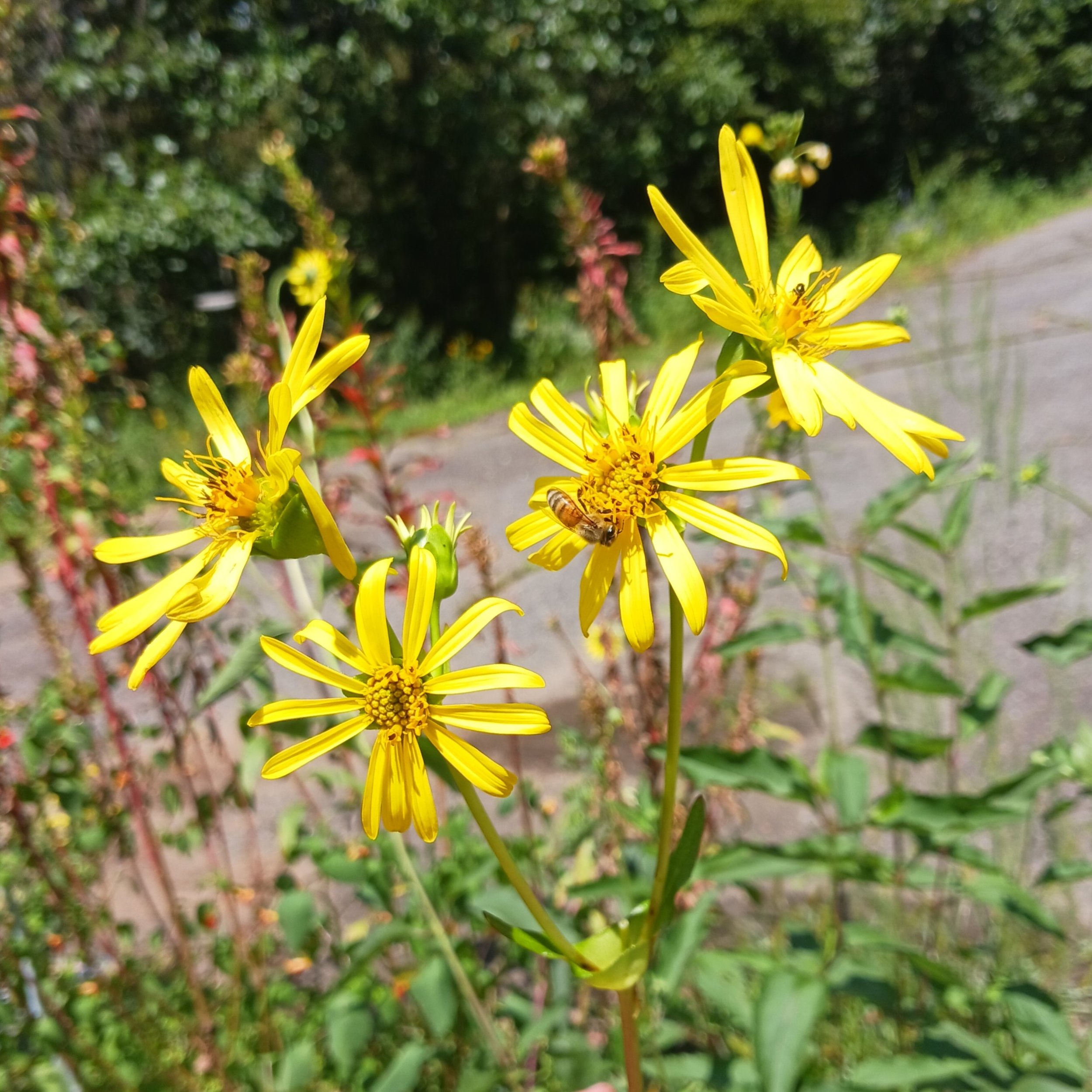
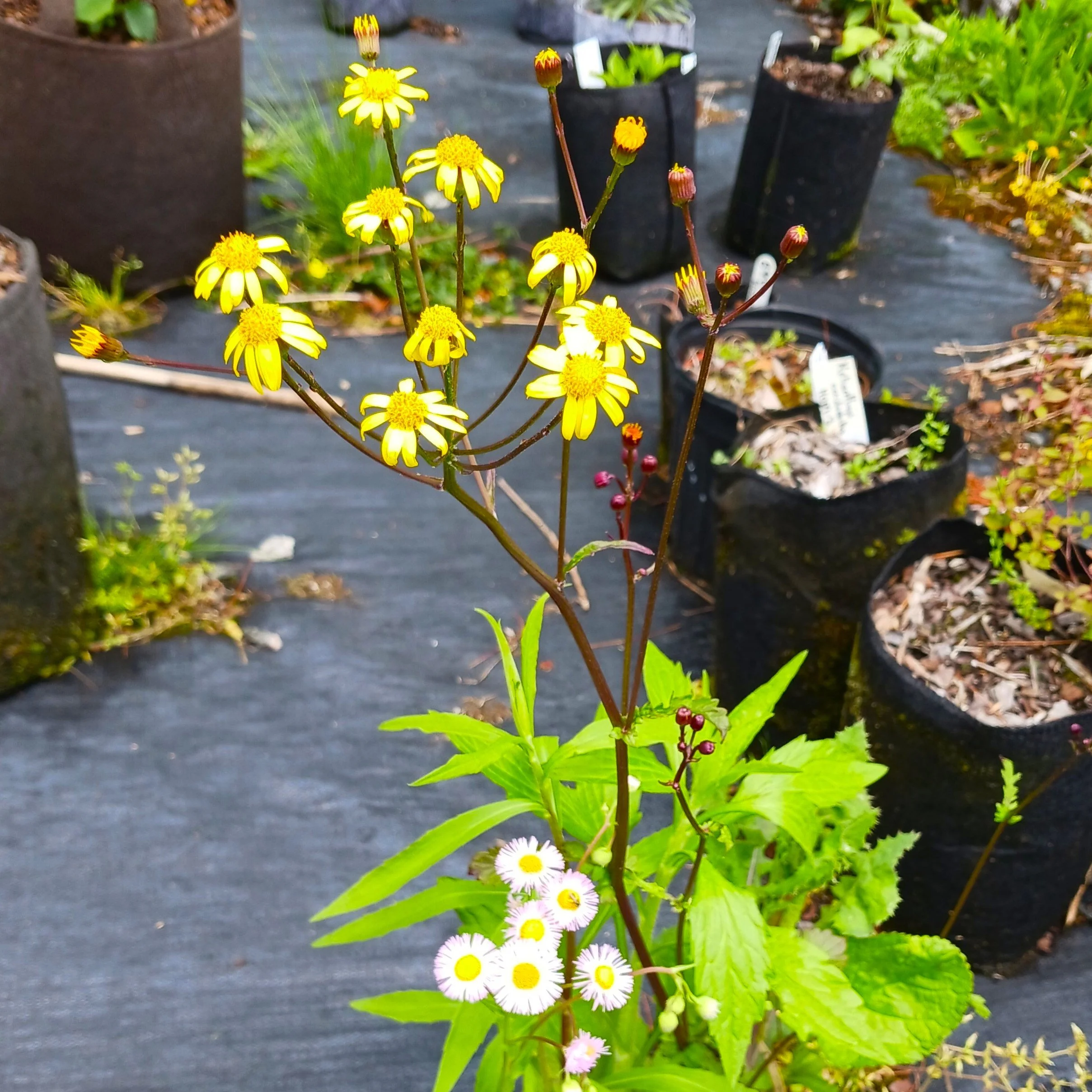
NC Ecotype! Packera aurea is a spring-blooming perennial wildflower that also works well as a year-long semi-evergreen groundcover. This is one of our most common Appalachian wildflowers, and if you learn to recognize the round basal leaves, you may find it already growing in your garden. For those who are not familiar, this species was once in the genus Senecio and is often called Golden Ragwort or Golden Groundsel. The flowers appear most often in April, but can bloom any time from March through May, and typically last 2-4 weeks. They only reach up to 2-3’ in height at most, but will produce wind-dispersed seeds that can easily spread. While they can tolerate dry conditions, these perennial wildflowers are most often found in full sun to dappled shade in areas that range from medium-wet to moist. The foliage is very cold hard, and can stay green most of the year. This is one reason we love to use Packera aurea in landscaping. It can quickly provide low cover for soil, acting as a natural green mulch, but will not stop taller perennials from growing through. Since they are early bloomers, they can be easy to maintain to avoid too much reseeding before the later plants flower.
Another benefit of Packera aurea is its role in a habitat garden, especially an area along a woodland edge with lots of room. The early flowers are great food for pollinators, including the monolectic bee Andrena gardeneri, which only feeds on Packera flowers. But after blooming, this groundcover’s leaves provide shade from sun and shelter from dry winds, especially in winter, providing a home for many small insects and animals. This species is also very resistant to browse from deer or rabbits, so it can help to protect tender shoots of other plants early in the season.
Pollinators: bumblebees, leafcutter bees, mason bees, miner bees, small carpenter bees, sweat bees, butterflies, flower flies, tachinid flies, soldier beetles, mason wasps
Host Plant for Butterflies/Moths: 4+ species of moths in our region
Dependent Species: 1 monolectic bee species in our region which only feed on Packera species - Andrena gardeneri; Agonopterix senicionella is a species of moth which only feeds on Packera
Wildlife Value: Hummingbirds, Songbirds, Thrushes, Wood Warblers, shelter, winter cover, stem-nesting bees
Deer Resistance: Excellent
Native Region: Appalachian Mountains, Piedmont
Seed Origin: Ashe County, NC
Ecoregion: 66 - Blue Ridge
Light Recommendation: Full Sun, Part-sun, Dappled Shade
Soil Moisture Recommendation: Medium-Wet, Moist, Medium
USDA Zones: 3-8
States found in our region: AL, DE, GA, KY, MD, NC, PA, SC, TN, VA, WV
Other states found: AR, CT, FL, IA, IL, IN, MA, ME, MI, MN, MO, MS, ND, NH, NJ, NY, OH, OK, RI, TX, VT, WI