 Image 1 of 6
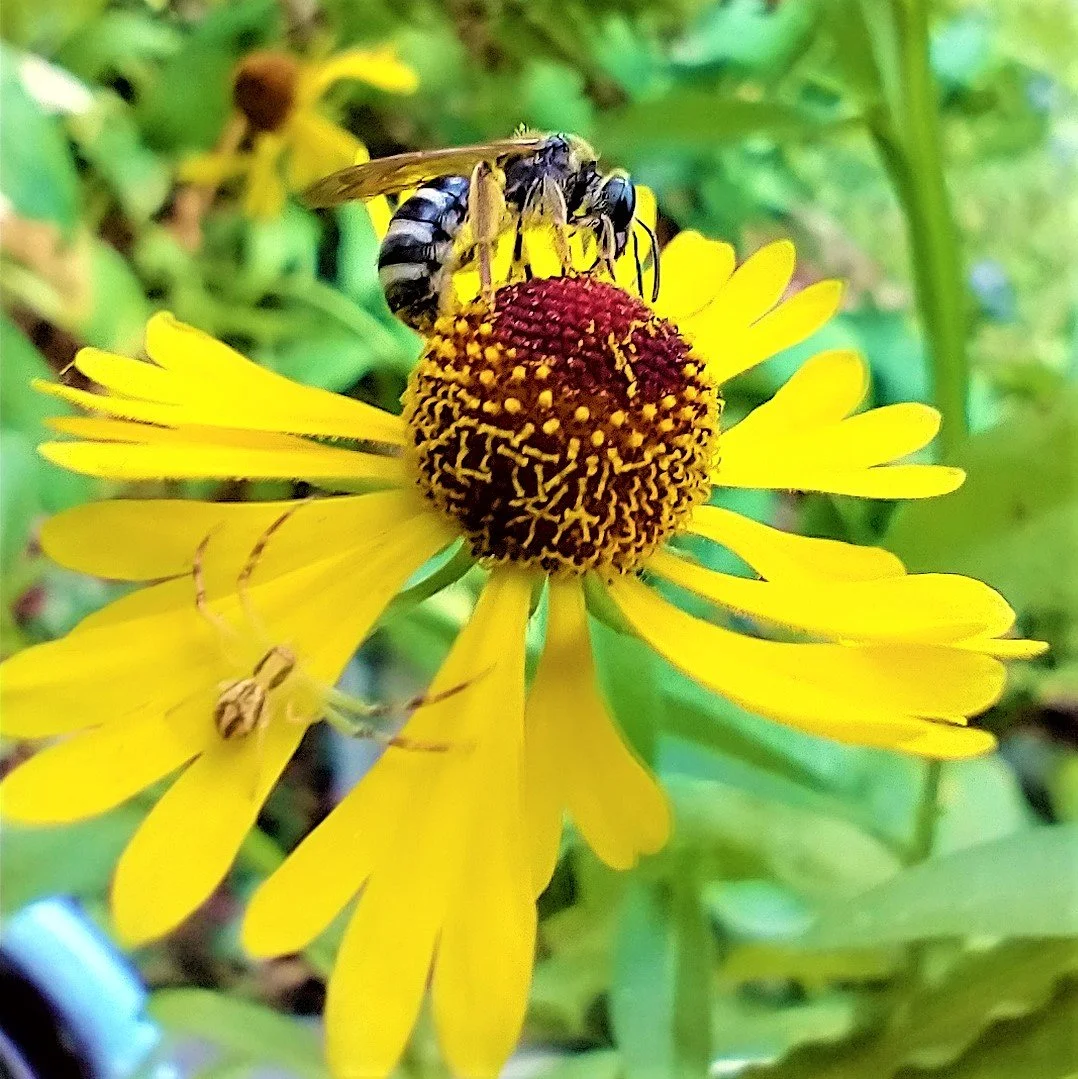 Image 2 of 6
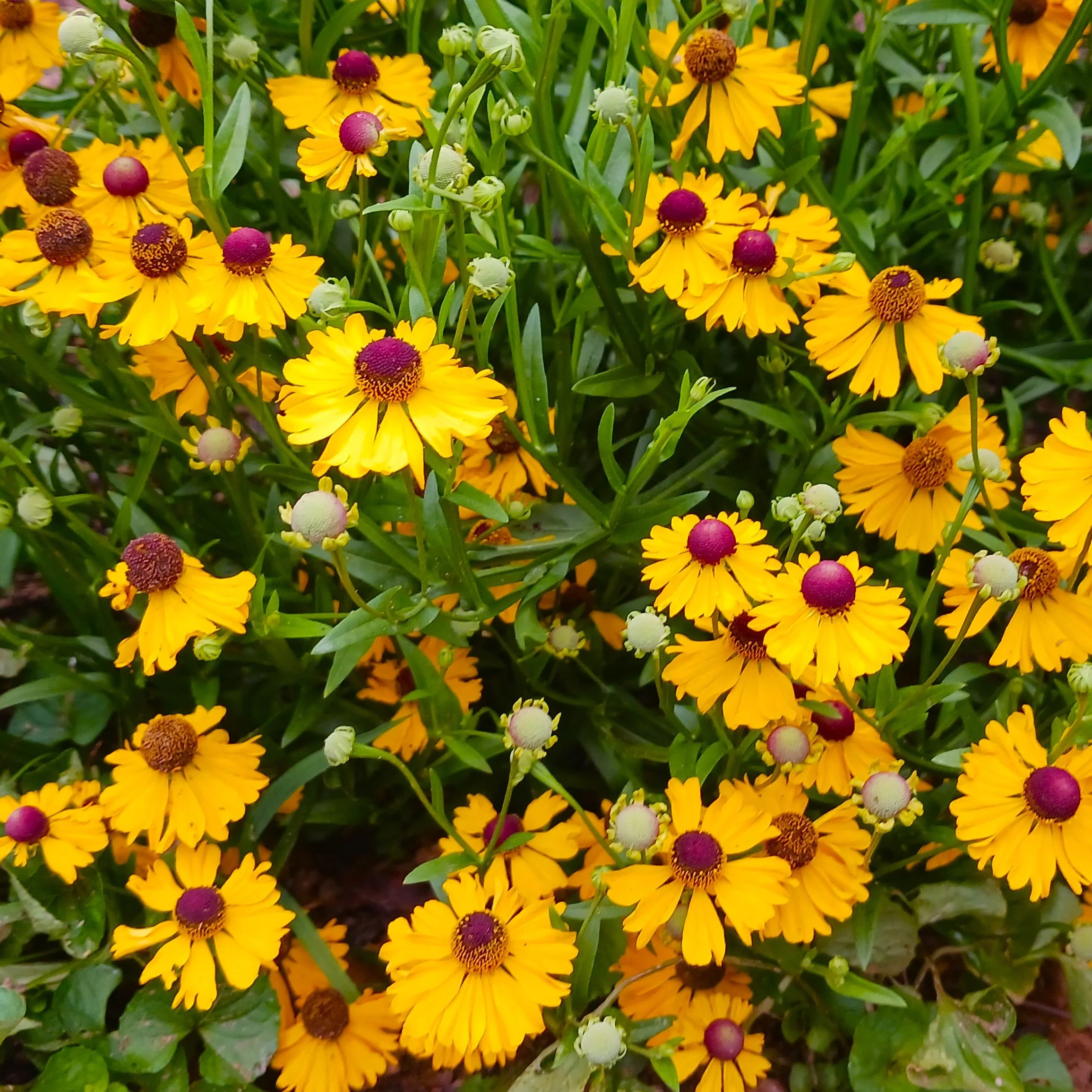 Image 3 of 6
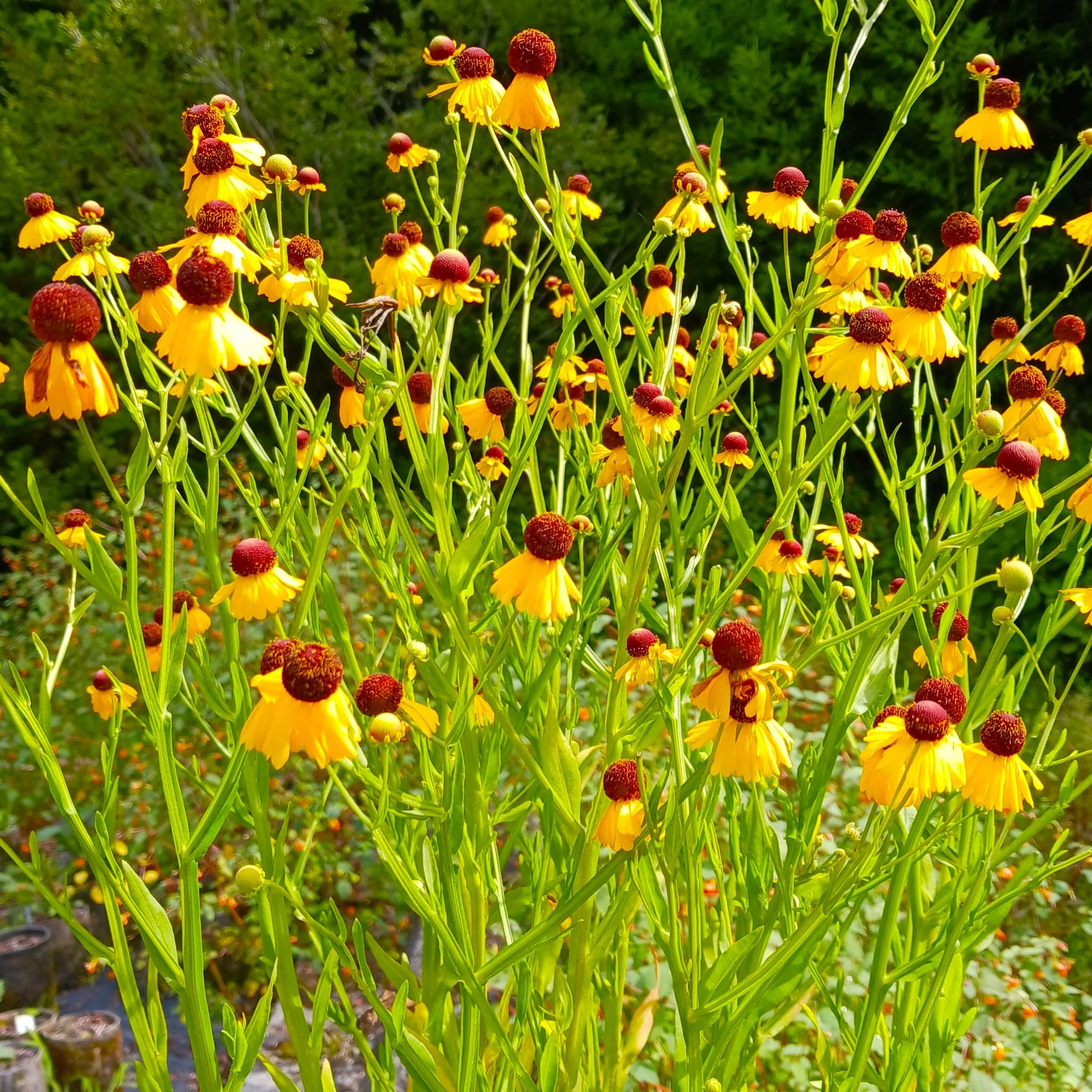 Image 4 of 6
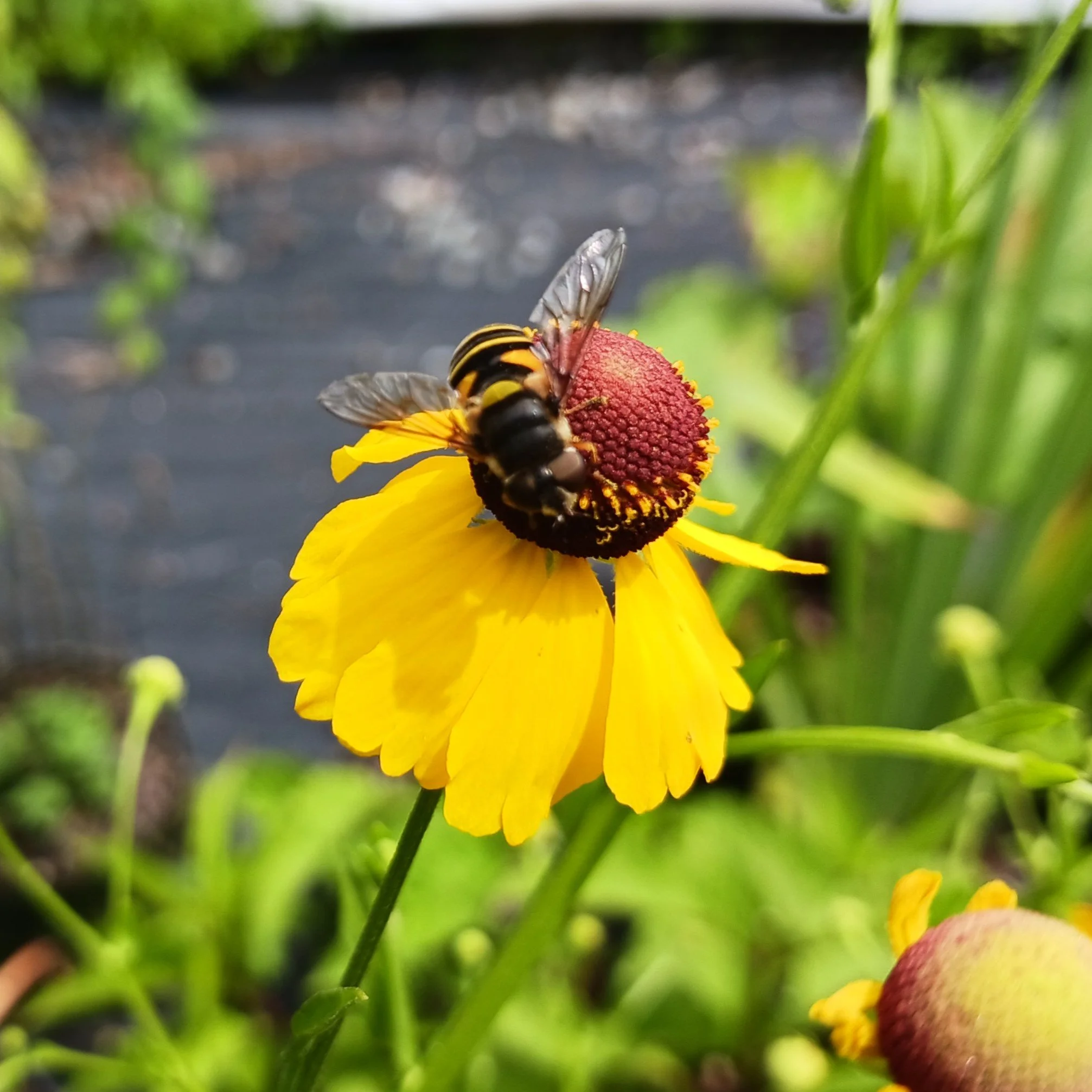 Image 5 of 6
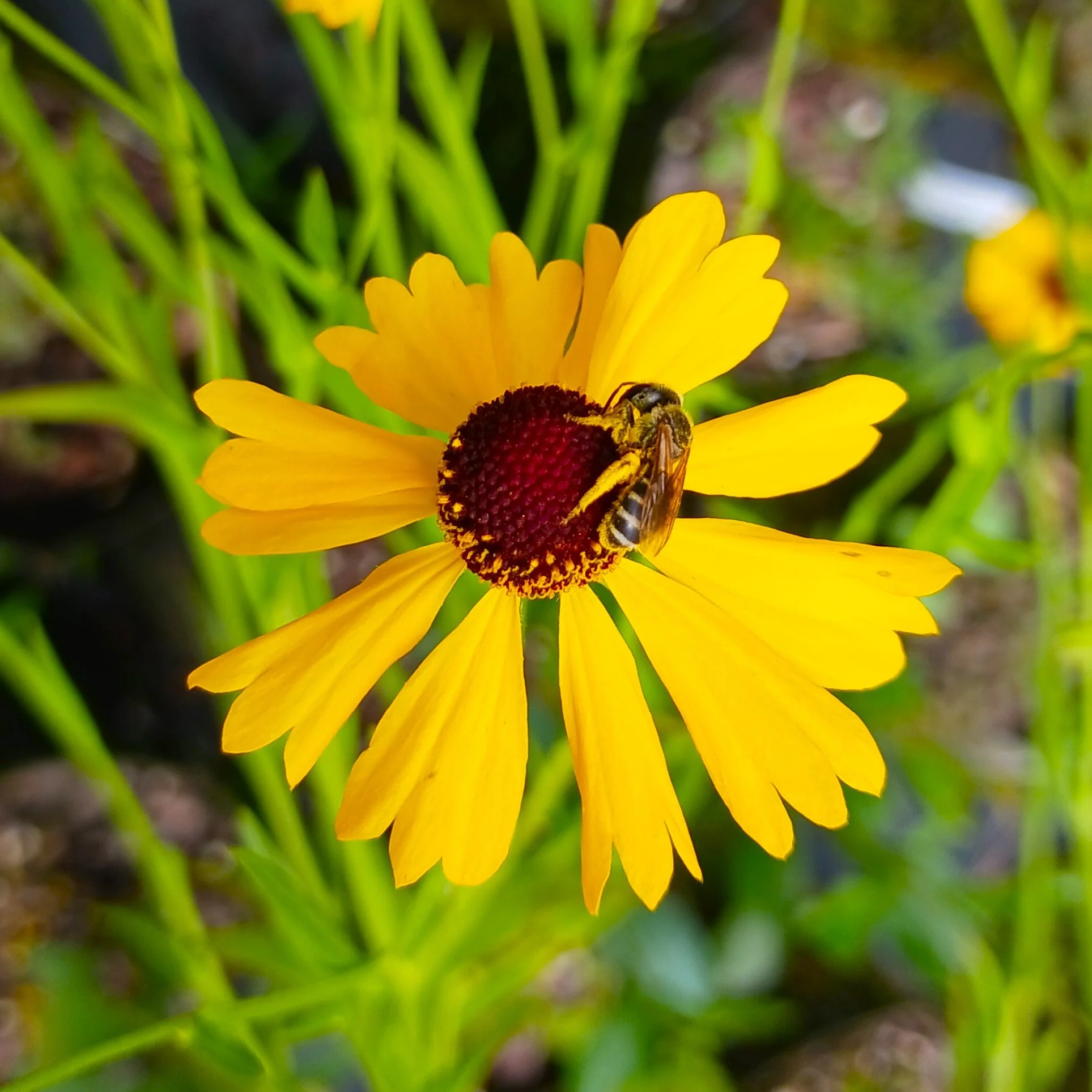 Image 6 of 6
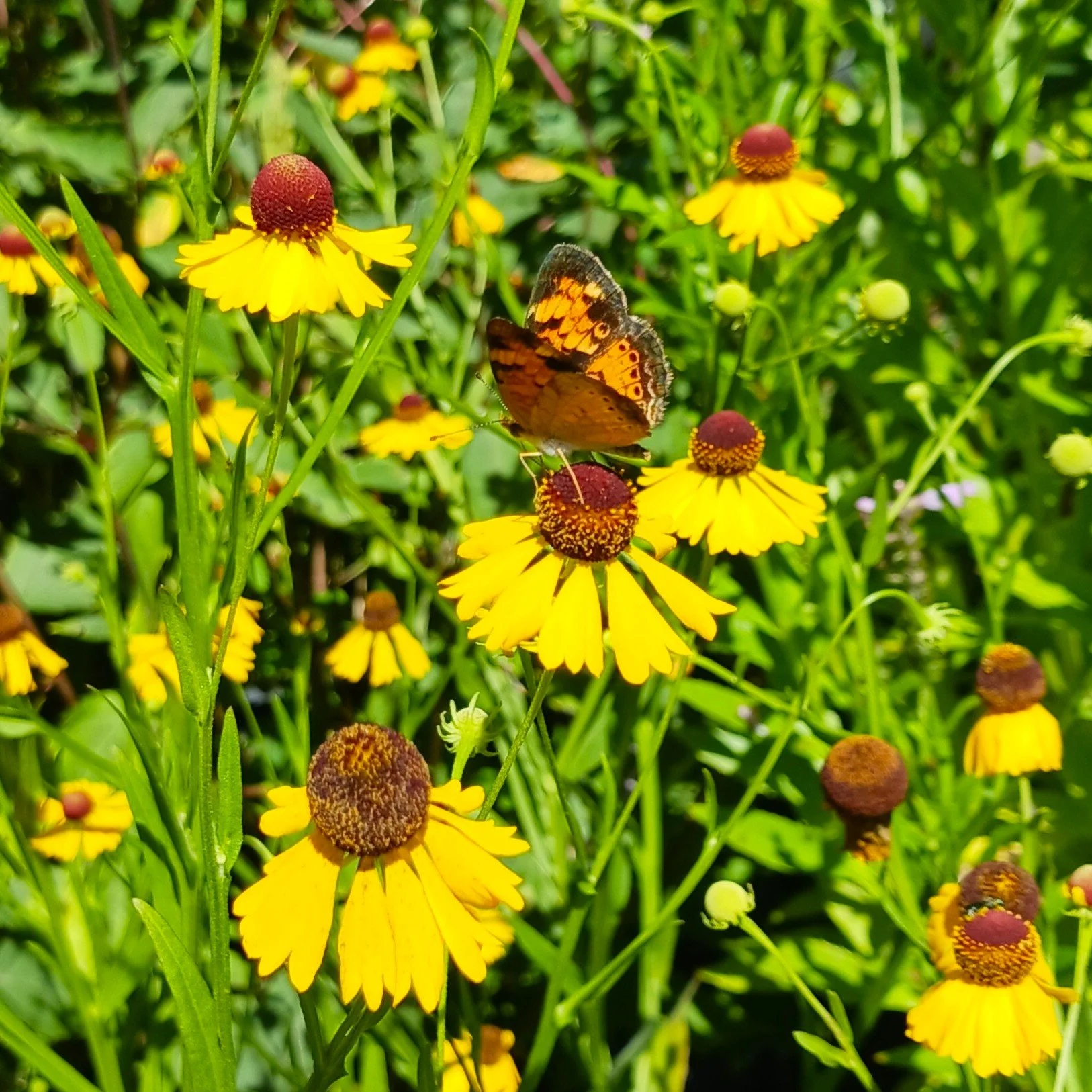
Helenium flexuosum is a water-loving perennial with gorgeous, long-lasting blooms. The flowers are small but abundant - yellow ray flowers with soft, round, burgundy-purple centers. Common names range from “Southern Sneezeweed” to “Purple-headed Sneezeweed”, but the name is likely a reference to historical uses rather than any allergens - the pollen of this plant is designed to stick to pollinating insects, not drift in the air like pollen of the sneeze-inducing ragweed. Helenium flexuosum is great for many garden spaces. It can reach up to 3’ in height and can grow out to 3’, but it has a dense, fibrous root system that does not spread. It can reseed easily in wet conditions, so deadheading is recommended in small spaces. Growing best in full sun, Helenium flexuosum can grow well in wet areas or in average soils in areas with high rainfall, like the Appalachian Mountains. In hotter and drier areas, it may do best adjacent ponds and streams, or regularly flooded rain gardens. Flowers can bloom for 6+ weeks from July into October.
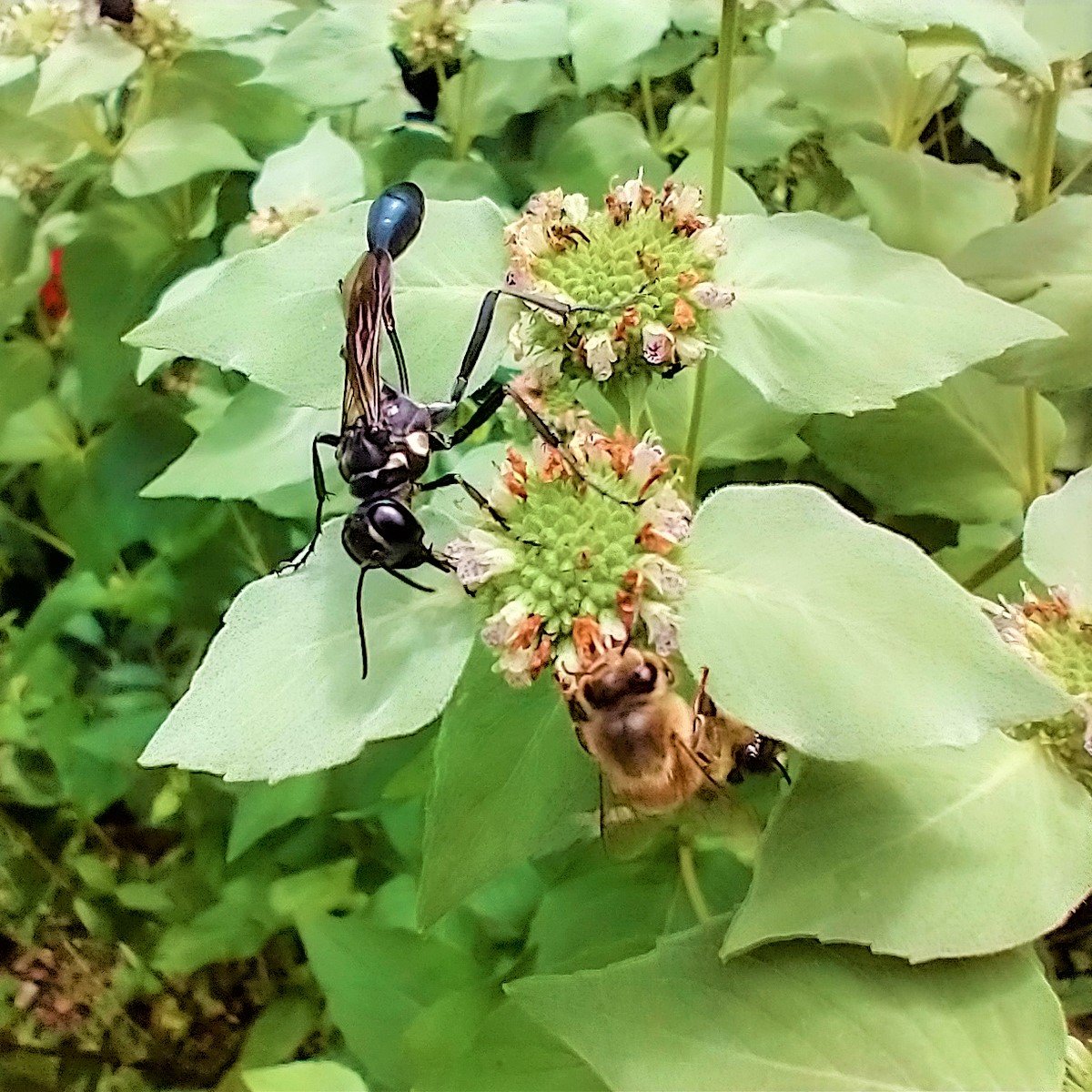
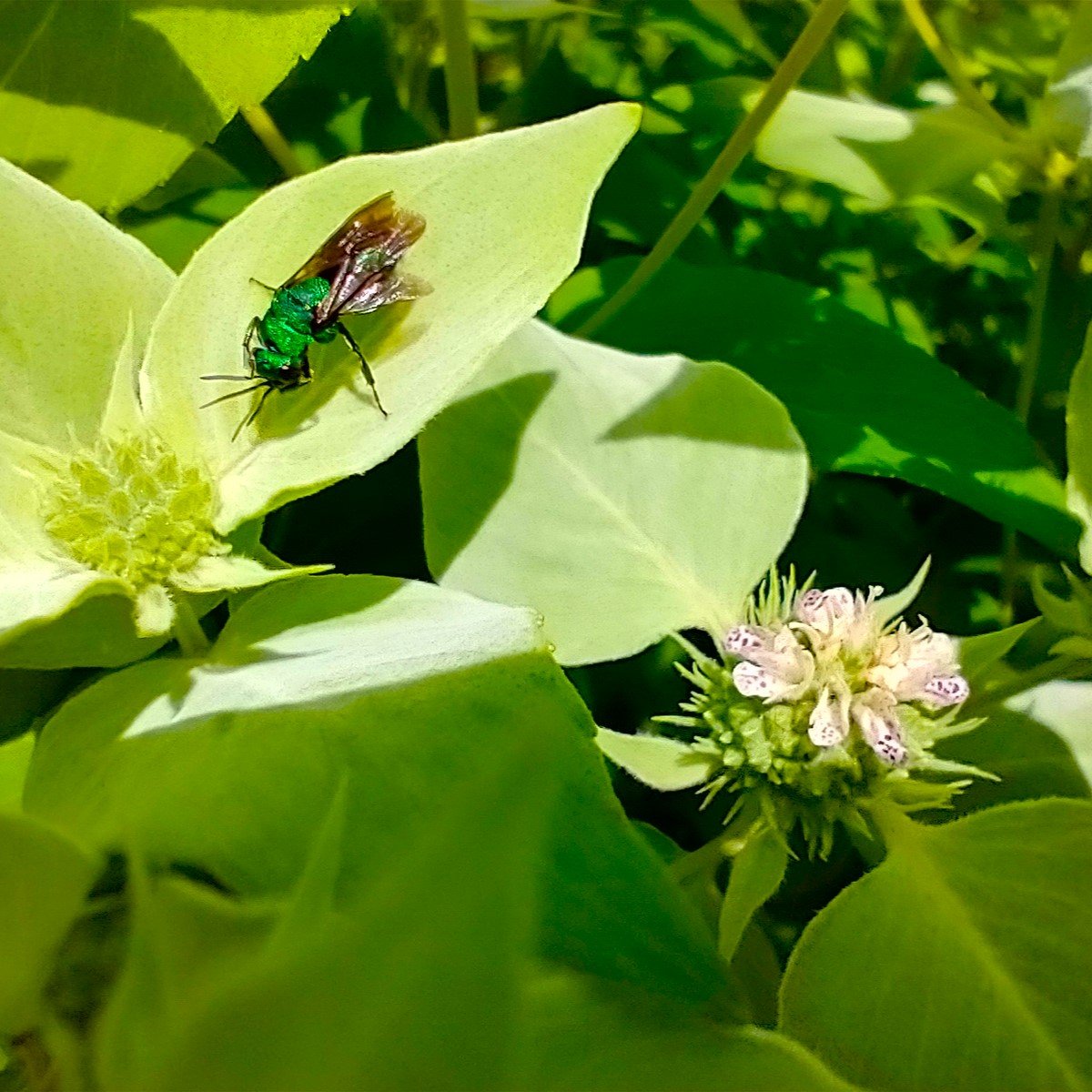
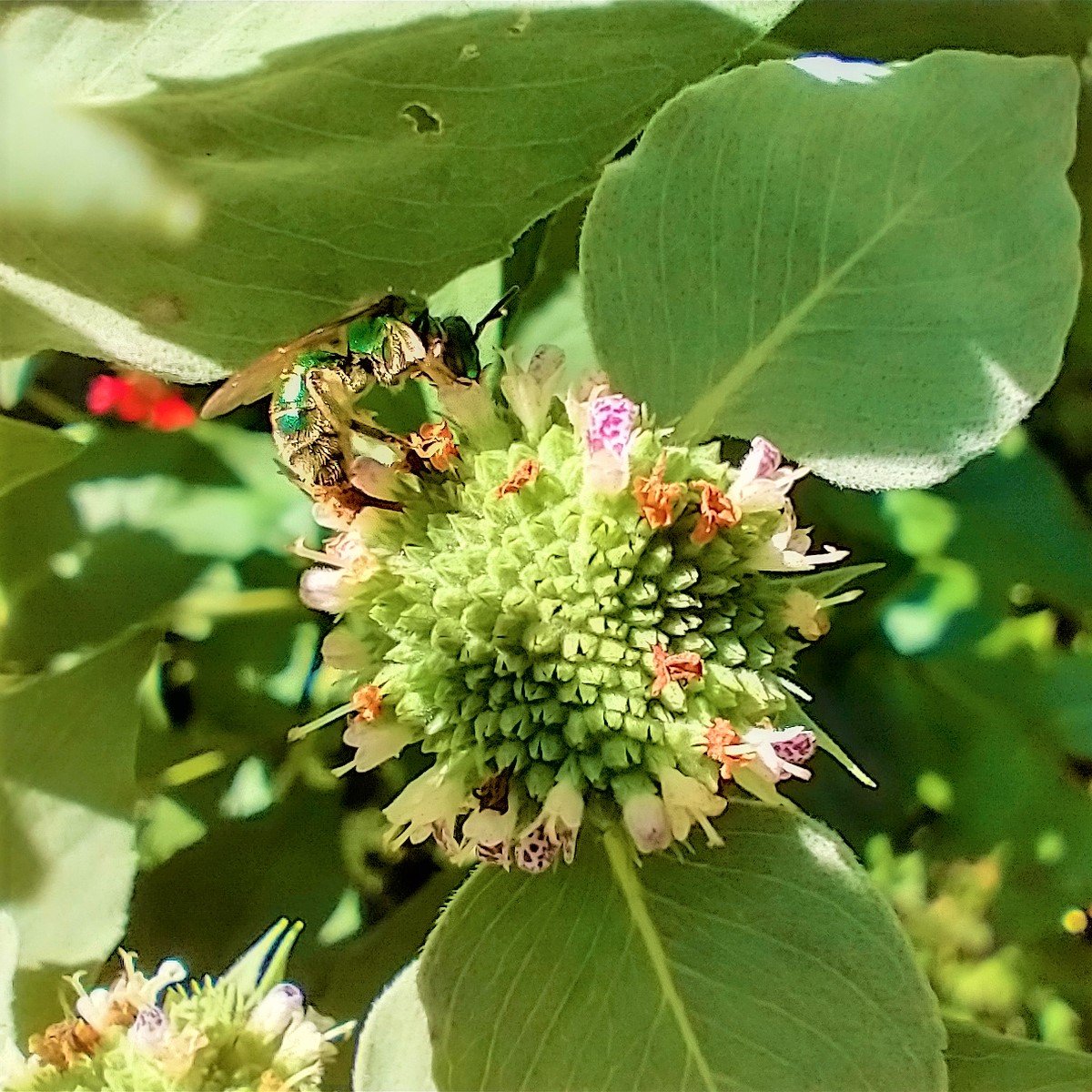
One of the reasons Helenium flexuosum makes a great addition to a pollinator garden is the variety of pollinators it attracts. The large round flowers are full of nectar and pollen which is easy to access, but the stalks are very sturdy - we often see large swallowtail butterflies feeding on them as often as the smaller solitary bees. The leafy stalks also hide small insect herbivores which birds love to feed on, and some moth caterpillars and bees feed exclusively on Helenium or only a few other species. This is also a great choice for gardens that want to attract wildlife without being over-browsed by deer.
Please note - this plant is poisonous and no part of it should be eaten
Pollinators: bumblebees, leafcutter bees, long-horned bees, pebble bees, small carpenter bees, sweat bees, butterflies, flower flies, soldier beetles, grass-carrying wasps, mason wasps, potter wasps, sand wasps, thread-waisted wasps
Host Plant for Butterflies/Moths: 9+ species of Lepidoptera in our region
Dependent Species: 4 species of oligolectic bees; Lepidoptera species - Aethes heleniana
Wildlife Value: Songbirds, shelter
Deer Resistance: Excellent
Native Region: Appalachian Mountains, Piedmont, Coastal Plain
Seed Origin: nursery seed collected in North Carolina
Light Recommendation: Full Sun, Part-sun
Soil Moisture Recommendation: Wet, Medium-Wet, Moist
USDA Zones: 5-9
States found in our region: AL, DE, GA, KY, MD, NC, SC, TN, VA, WV
Other states found: AR, FL, IL, IN, LA, MO, MS, NE, NJ, OK, TX - has naturalized in states outside of native range